9/2/2026
Honouring First Nations Birth Stories
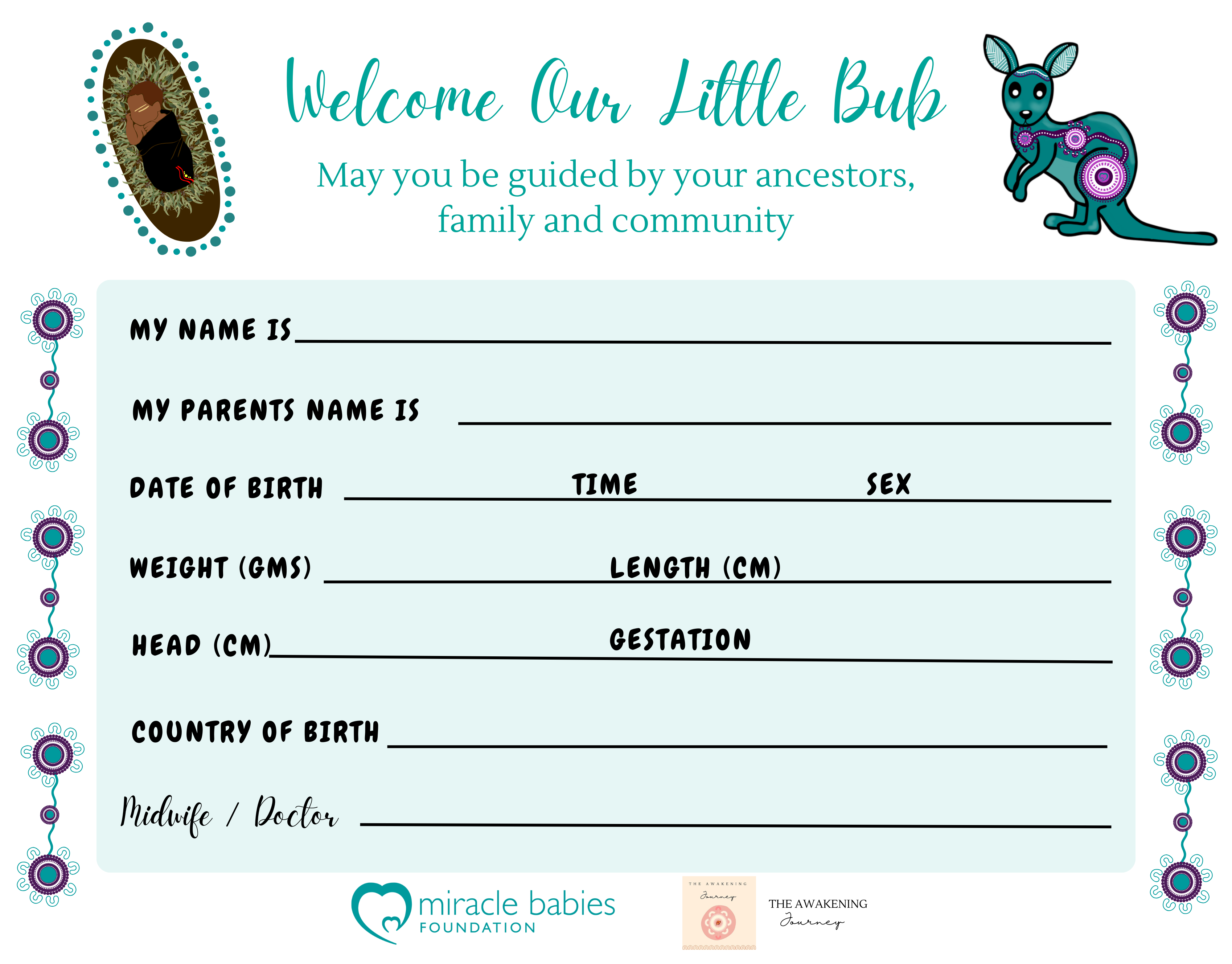
In acknowledgement and to pay our respects to First Nations families in Australia, Miracle Babies is proud to have partnered with The Awakening Journey to bring hospitals a carefully designed Cot Card.
Miracle Babies hopes this card brings cultural pride and recognition to the next generation.
We sat down with Darinka Ondrovcik who helped us bring the design to life to talk about the significance of this new resource.
MBF: Firstly, we would like to say a huge thank you for helping us curate this card, we wanted to make sure it would make a significant impact and we wouldn't have been able to get to where we are without your help. Tell us a little bit about yourself and why this project was something that resonated with you.
Darinka: I’m Darinka Ondrovcik, a proud Kamilaroi woman and founder of The Awakening Journey. I create culturally grounded resources that support Aboriginal and Torres Strait Islander women and families through pregnancy, birth, and beyond. My work is about walking alongside families, honouring culture, and fostering connection, care, and safety, especially when navigating health systems.
I’m proud to partner with Miracle Babies Foundation, whose commitment to compassion, understanding, and respect for our mob aligns with my vision. My reason for getting involved is to ensure families navigating health systems feel culturally safe, understood, and supported. I want to create spaces where Aboriginal and Torres Strait Islander families are seen, respected, and empowered, where culture, identity, and belonging are honoured, and where every parent and child feels guided, cared for, and connected throughout their journey.
MBF: Who shared their voices, stories or guidance in bringing the announcement cards to life?
Darinka: The announcement cards were shaped through the voices and lived experiences held within The Awakening Journey, guided by First Nations ways of knowing, being and doing, and informed through respectful yarns with Miracle Babies Foundation. They reflect collective wisdom from Aboriginal families, community perspectives, and frontline care experiences, ensuring the resource is grounded in authenticity, compassion, and real family journeys.
MBF: How is cultural knowledge protected within this resource?
Darinka: Cultural knowledge is protected through a strengths-based and respectful approach that honours First Nations ways of knowing, being, and doing. The resource is guided by community values, cultural integrity, and lived experience, ensuring that culture is represented with care, permission, and purpose. The focus is on connection, belonging, and shared cultural understandings, presented in a way that is safe, inclusive, and respectful for families and communities.
MBF: What impact do you hope this resource will have?
Darinka: My hope is that every family feels grounded, supported, and surrounded by care and compassion, with the reassurance that they are not alone on their journey. I hope the cards create a gentle moment of connection during an incredibly vulnerable time, offering comfort, cultural safety, and a sense of belonging when families need it most.
MBF: Why was it important that this resource be shaped by First Nations voices?
Darinka: First Nations voices bring truth, depth, and cultural integrity. When resources are shaped by First Nations people, they move beyond surface-level inclusion and become genuinely culturally safe. This ensures families see themselves reflected with respect and dignity, and that care is delivered in a way that honours identity, story, and lived experience.
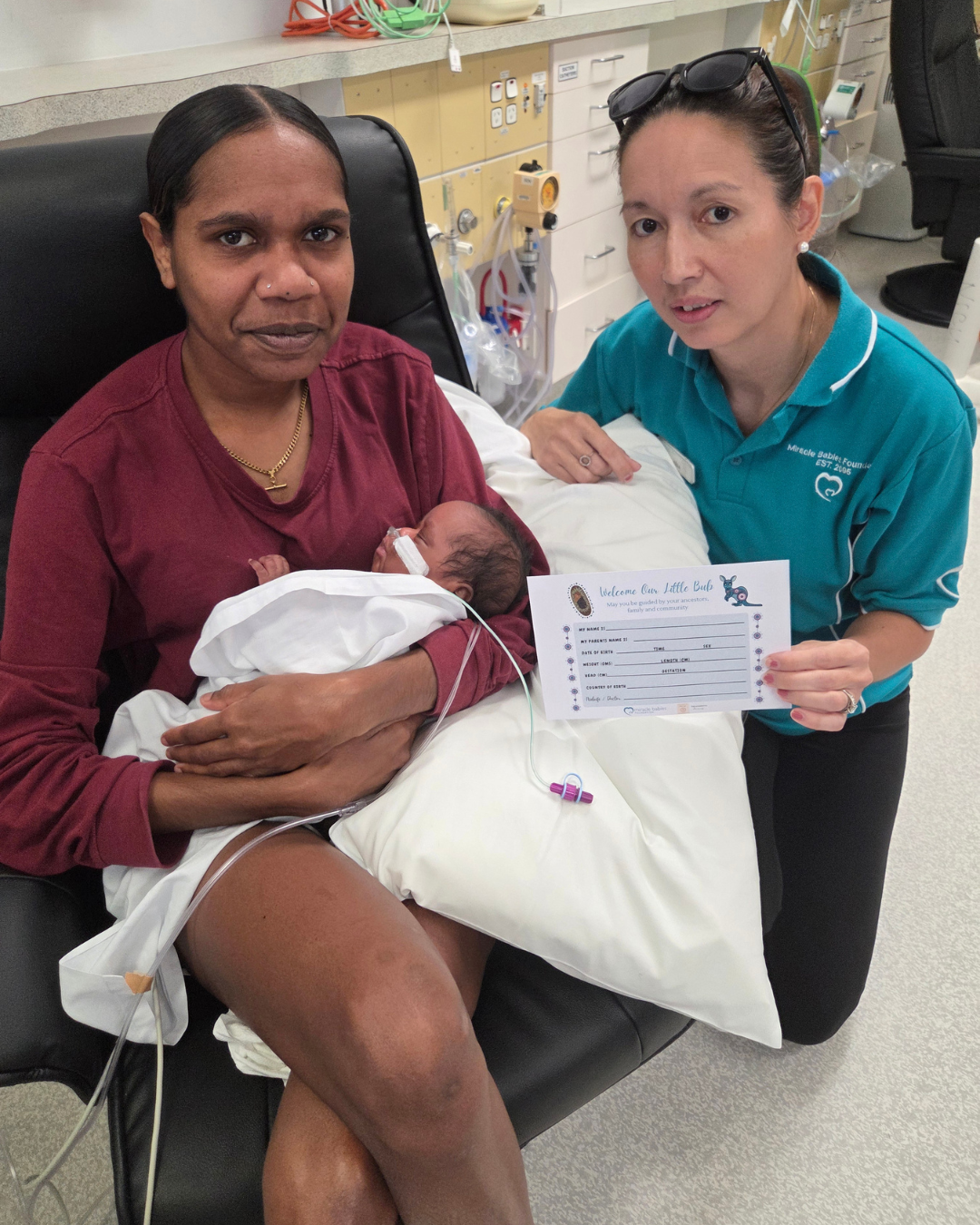
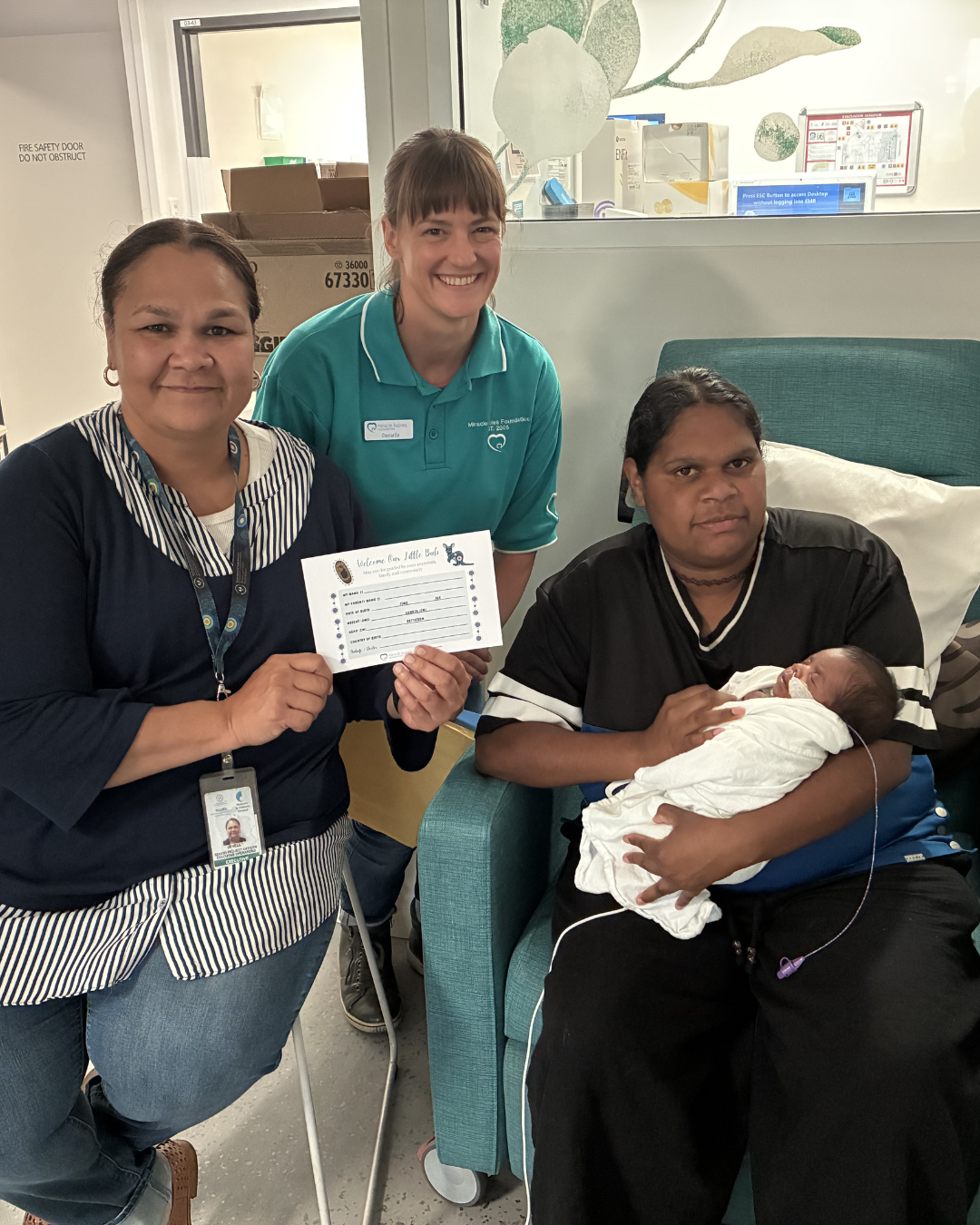
Royal Darwin Hospital, Northern Territory
MBF: Why is it important for children to learn about Country and culture from a young age?
Darinka: Learning about Country and culture from an early age supports children to grow with a deep and grounded sense of identity, belonging, and pride in who they are and where they come from. It helps them understand their place within family, community, and the wider world, strengthening their connection to Country, kinship, and cultural responsibilities.
When children are nurtured in culture from the beginning, they learn to walk with respect for land, waterways, ancestors, Elders, and the stories that have been carried across generations. This connection provides a strong foundation for emotional safety, spiritual strength, and cultural resilience, particularly as they move through different stages of life.
Embedding cultural learning early supports lifelong wellbeing. It fosters confidence, self-worth, and resilience, and creates a protective layer that supports children to navigate challenges while staying connected to who they are.
MBF: What impact would you love this to have on the next generation?
Darinka: I hope, in a small but meaningful way, this resource can contribute to a future where children grow up feeling held by their culture, confident in who they are, and supported by systems that genuinely see, respect, and value them. My hope is that it sits gently alongside families, communities, and services, reinforcing the importance of culture as a source of strength, safety, and healing.
For the next generation, I hope this resource helps to normalise culturally safe and responsive care, where culture is not an add-on but a natural and respected part of everyday practice. I hope it strengthens ongoing connections to Country, community, and identity, and quietly reminds children and families that their stories, experiences, and ways of being matter, and always have.
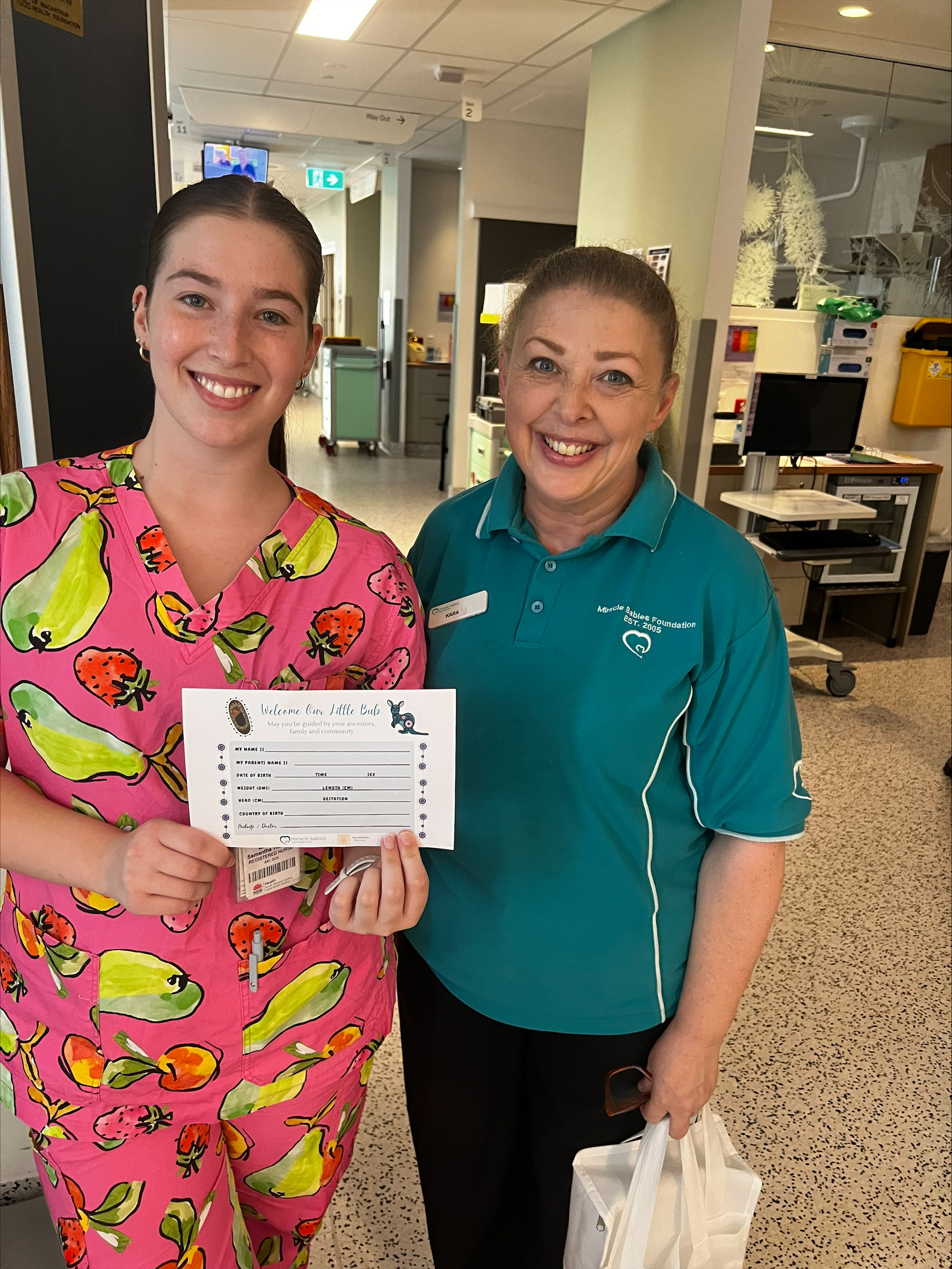
Campbelltown Hospital, New South Wales
"Strong spirit, proud culture, even the tiniest feet walk with all our mob by their side. These cards help promote and share littles ones culture."
- The ALO team, Liverpool Hospital.
The First Nations Cot Card is available for hospitals to order now in sets of 20 or 40 to have on hand when a new baby is admitted to a Neonatal Unit. Alternatively, families can edit their own digital version on our website.
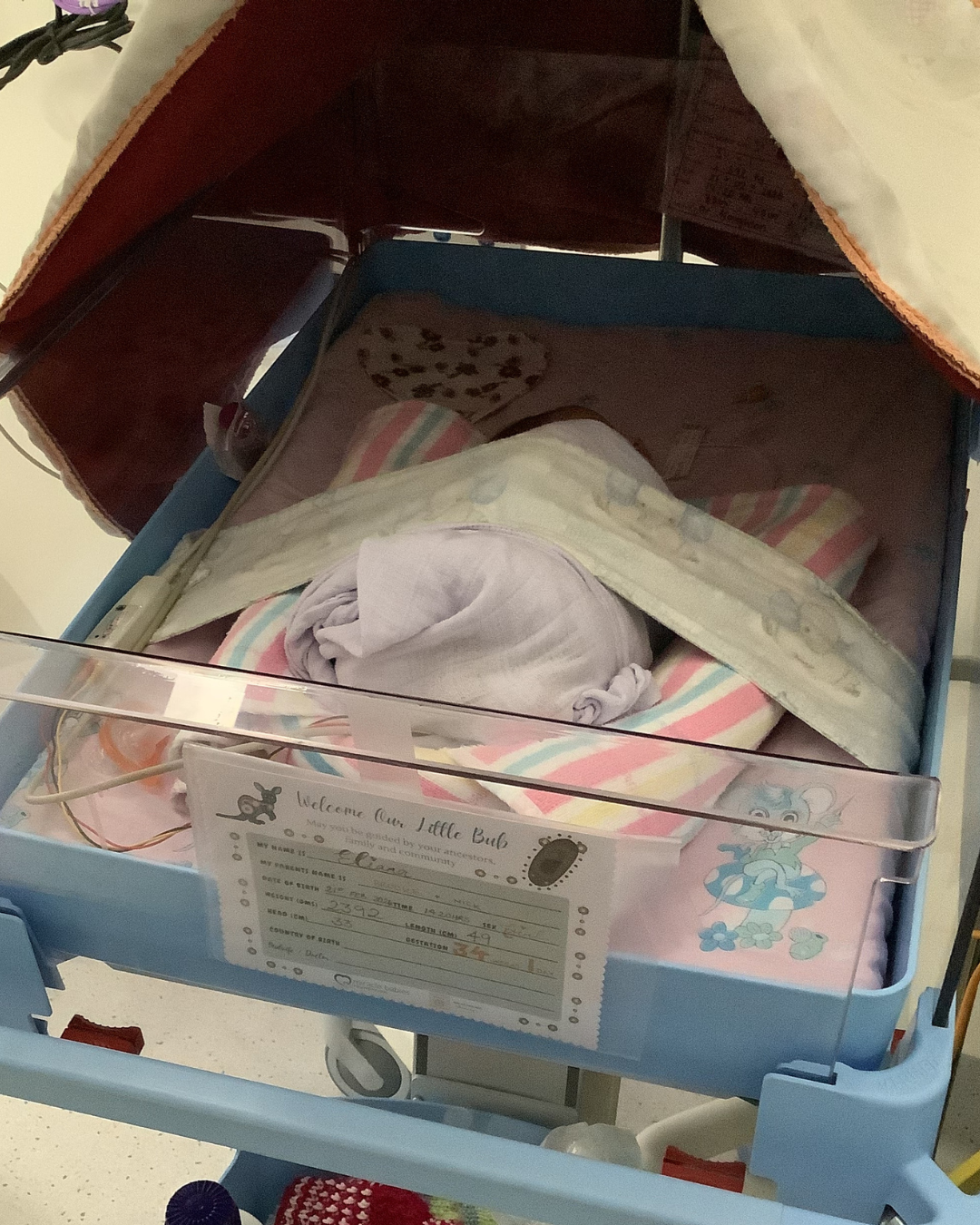
Liverpool Hospital, New South Wales
Women and Children's Hospital, South Australia
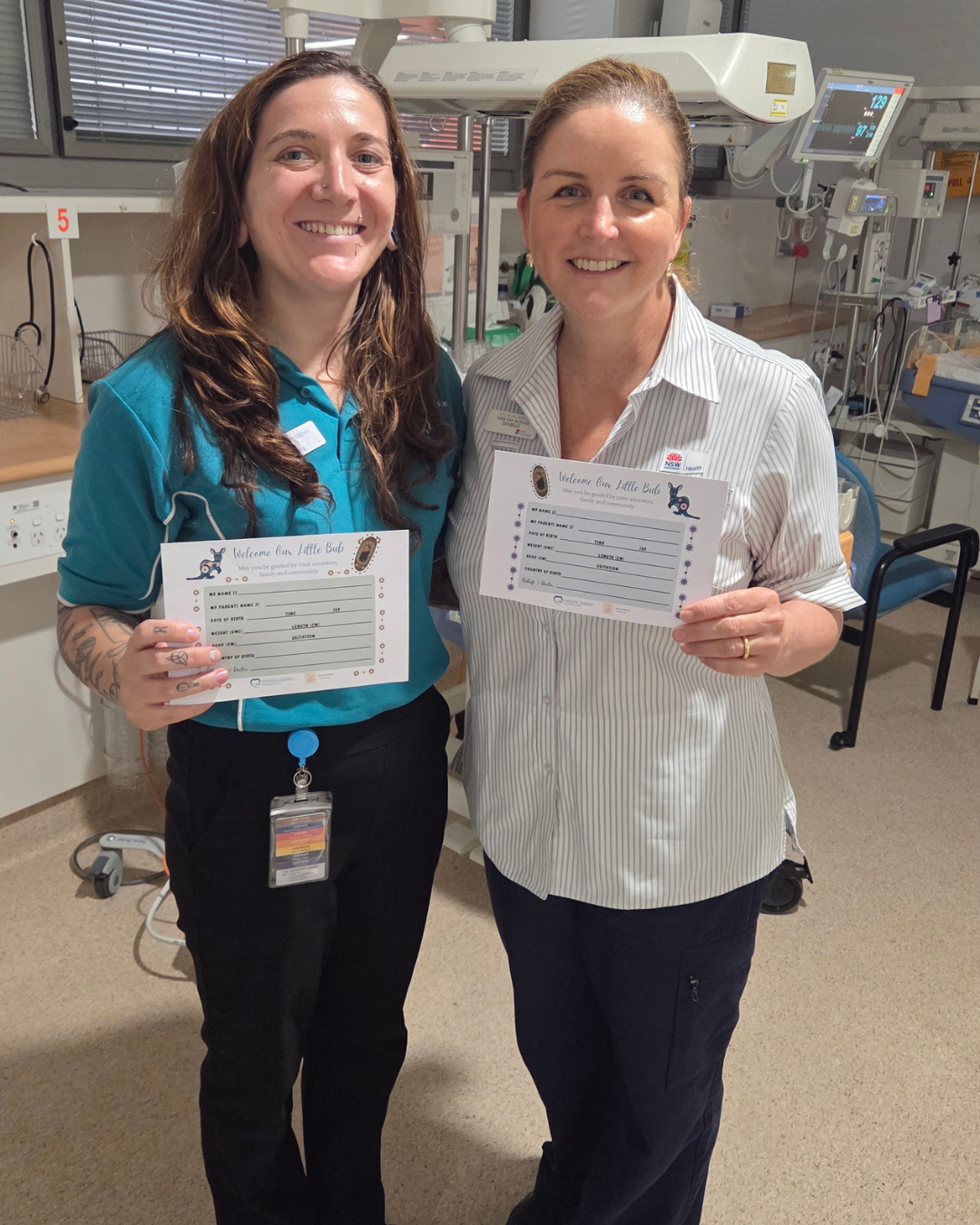
Wollongong Hospital, New South Wales